Showing posts with label books. Show all posts

19 November 2017

a grief all modern humans share

via
My beloved 10th grade English teacher, Mr. Krieckhaus, and I have been emailing recently about life, and he shared this excerpt from Francis Weller's The Wild Edge of Sorrow with me.

I'm lucky that I always have somewhere I can turn to expand my mind, and this really made me brain explode a bit. This is a grief that we humans share, living in the modern world, and he describes it so well.

As we approach Thanksgiving, let's see how we can change this.


It can feel daunting to read something like this. A heavy weight sits upon us as we think of our lack of village. But that is temporary, like everything else. We can start to build a village, start welcoming people, and creating this community wherever we are with whatever we have, right now.

via

24 July 2016

search inside yourself


Chade-Meng Tan was one of the early Google engineers, and he created a course for Google employees that helps them be more effective both at work and in their personal lives. As someone who works constantly on being less reactive (think before acting), I especially appreciated his "Siberian North Railroad" concept. Basically, instead of riding emotions like a horse that leads you wherever, you learn how to steer and control the horse. :-)

28 March 2016

let kids play

via
I've said this before: kids really need time and (mental) space to play. And we parents need to chill out on overscheduling our kids.

This is a great article on Quartz that looks at stress in young people and the rising rates of depression in our youth.
My hypothesis is that the generational increases in externality, extrinsic goals, anxiety, and depression are all caused largely by the decline, over that same period, in opportunities for free play and the increased time and weight given to schooling. 

19 January 2016

juicing for health

via
This juicing trend has been around for years, and I didn't have any opinion of it one way or the other until I saw my brother-in-law last month for the holidays.

He has a desk job and had slowly gained weight, as so many people do. First, he lost about twenty pounds five years ago after we shared The China Study with our families. He started doing yoga for his back. Then, he started juicing.


22 June 2015

the next adventure

via
It seems four years is my shelf life for a job/career. First, it was political science/international relations in Washington, DC, for college. Then, it was acting in L.A. Then, it was education for my Master's degree and teaching in a correctional facility in Boston. My students told me if I really wanted to make a difference in their lives, I should give them jobs. With a criminal record, they couldn't even get jobs bagging groceries; therefore, "selling drugs was their only option." Right.

So, I opened a coffee shop/bakery and because coffee is such a democratic industry, I ended up hiring plenty of formerly incarcerated and often very creative artist types to be baristas and bakers. Because I started the business with more of a nonprofit mentality, I never cut corners and have always given my team as much as I possibly could. I'm proud of what the shop serves, its customer service, and what it stands for, and I believe all businesses should have such integrity. Starting a business was the hardest thing I had done (until I became a parent).

Now, my little coffee shop is almost four years old, and with my (business) partner, we've also started a coffee roasting company. But, the clock is ticking, and it seems my time with both the coffee shop and the coffee roasting company is also coming to an end. My partner wanted more control, and I didn't want anything other than 50/50, so I am stepping down and leaving the business altogether. It's strange to think that once all of the loose ends are tied up, I will no longer be a business owner. It's a huge mental shift, since I thought I would own this business for the rest of my life, and it never occurred to me that I could leave my "babies" to do anything else. But, it also feels right.

I'm due to have my second (human) baby in four days, my (life) partner and I are hoping to go to Europe for his sabbatical year, and I just won't be that useful to the business as we move forward. So, tick tock, life keeps going, and we just have to adapt.

Now, I just have to figure out how I can be most useful as a human being. I just read Simplicity Parenting, and one lesson that really resonated with me (i.e., that I really needed) was the reminder to use words wisely. The filter the author describes is to make sure before you speak that what you say is true, kind, and necessary.

True? Bye bye, gossip, exaggeration and opinion posing as truth.

Kind? Everything can be communicated in at least twenty different ways. It takes a great person to be able to effectively and kindly communicate things that may not be as pleasant to hear, and the home is a great place to set an example of kindness as the default setting.

Necessary? In our clutter-filled world, will what we say be an improvement upon much needed silence? As a non-filterer, this one may be my greatest challenge, but I wholeheartedly embrace it and will try my best.

So, as I venture forward, starting over professionally yet again (still hoping for the One, rather than a four-year fling), I'll at least try to do so using words more carefully.

Kind. True. Necessary.

Let's go.

05 May 2015

siddhartha by herman hesse


via
Life has a way of continuing to surprise me every day—just when I think I've seen it all, another curveball comes my way. So, it seemed a good time to revisit these two grounding chapters from Herman Hesse's Siddhartha. Enjoy. :-)


Awakening

As Siddhartha left the grove in which the Buddha, the Perfect One, remained, in which Govinda remained, he felt that he had also left his former life behind him in the grove. As he slowly went on his way, his head was full of this thought. He reflected deeply, until this feeling completely overwhelmed him and he reached a point where he recognized causes; for to recognize causes, it seemed to him, is to think, and through thought alone feelings become knowledge and are not lost, but become real and begin to mature.

Siddhartha reflected deeply as he went on his way. He realized that he was no longer a youth; he was now a man. He realized that something had left him, like the old skin a snake sheds. Something was no longer in him, something that had accompanied him right through his youth and was part of him: this was the desire to have teachers and to listen to their teachings. He had left the last teacher he had met, even he, the greatest and wisest teacher, the holiest, the Buddha. He had to leave him; he could not accept his teachings.

16 November 2014

write your way into peace and clarity of mind

Eric Barker has done it again. Here's how to write your way out of anxiety, tragedy or heartache in four steps.

How To Deal With Anxiety, Tragedy Or Heartache – 4 Steps From Research

  By Eric Barker
how-to-deal-with-anxiety

“You don’t remember me, but I was in your experiment a year ago. I just wanted to thank you. It changed my life.”
James Pennebaker has had a number of people say this to him over the years.
In the early 80’s he came across a study showing that people who experienced personal traumas but didn’t discuss them were more likely to get sick.
He wondered if just writing about their emotional upheavals could help people recover. And the research he did changed lives.
In the 30 years since, hundreds of studies have documented the effectiveness of expressive writing.
It helped with anxiety, tragedy, heartache… It even gave relief to those coping with cancer, heart disease, chronic pain, and AIDS.
People who write about their problems gain a host of benefits including feeling happier, sleeping better, and even getting better grades.
Across multiple studies, people who engage in expressive writing report feeling happier and less negative than they felt before writing. Similarly, reports of depressive symptoms, rumination, and general anxiety tend to drop in the weeks and months after writing about emotional upheavals (Lepore 1997). Other studies found improvement in overall well-being and improved cognitive functioning (Barclay & Skarlicki 2009).
I wanted to learn more, so I gave the man himself a call.
Jamie Pennebaker is a professor at the University of Texas at Austin and the author of a number of books including:
In this post you’ll learn how writing can help you overcome emotional hardships and the best way to use it to help you get past tough times.
Let’s get started.

Can Just 20 Minutes of Writing Change Your Life?

Bottling up your problems is stressful. People who keep their struggles a secret go to the doctor 40% more often than those who don’t.
…among those who had traumas, those who kept their traumas secret went to physicians almost forty percent more often than those who openly talked about their traumas (Pennebaker & Susman 1988). Later research projects from multiple labs confirmed these results. Adults whose spouses had committed suicide or died suddenly in car accidents were healthier in the year following the death if they talked about the trauma than if they didn’t talk about it… Not talking about important issues in your life poses a significant health risk.
Some of us talk to friends or see a therapist when life gets hard. But not everyone.
It’s risky. Talking about your problems can mean feeling judged. You’re putting yourself on the line when you’re most vulnerable.
But writing lets you get many of the benefits of talking about your problems without the risk.
Here’s Jamie:
…in an ideal world, it works very similar to talking to a friend. The killer problem is when you talk to a friend or even a therapist, you’re putting yourself on the line. For it to work that other person has to be completely accepting, and the reality is we don’t tell our friends a lot of really deep and personal things because we think it might hurt the relationship. That’s the beauty of writing. You don’t have to worry about other people looking down on you or feeling nervous about putting yourself out there.

05 October 2014

spirituality research: ask and it is given

via
I don't even know where I came across this book title, but I requested it from my library just to see if it would be interesting.

Ask and It Is Given by Esther and Jerry Hicks is probably too new agey for many of my intellectual friends, but I'm trying to be open to everything and learning what I can from it all.

So, the basic premise of this book is that your feelings are your compass-- if something feels good, then you are on the right track (because we are designed to be joyous creatures in this world), and if something makes you feel bad, you need to recalibrate (or recalculate, as our GPS always says).

Here is the scale of emotions:

1. Joy/Knowledge/Empowerment/Freedom/Love/Appreciation
2. Passion
3. Enthusiasm/Eagerness/Happiness
4. Positive Expectation/Belief
5. Optimism
6. Hopefulness
7. Contentment
8. Boredom
9. Pessimism
10. Frustration/Irritation/Impatience
11. "Overwhelment"
12. Disappointment
13. Doubt
14. Worry
15. Blame
16. Discouragement
17. Anger
18. Revenge
19. Hatred/Rage
20. Jealousy
21. Insecurity/Guilt/Unworthiness
22. Fear/Grief/Depression/Despair/Powerlessness

26 September 2014

spirituality research: help thanks wow

via
I'm writing a novel that deals with spirituality, and I've come across all kinds of interesting ideas and philosophies in my research. After reading the Tanakh, the Bible, the Qur'an, the Bhagavad Gita, Paths to God by Ram Dass, and the Satanic Bible (it's good to see a variety of perspectives), I started seeking out more modern texts to see what they had to say.

Beloved writer of writers, Anne Lamott, wrote Help Thanks Wow, "the three essential prayers," with her usual poetic language and vivid descriptions about her experience with religion and spirituality.

Her parents "worshipped at the church of the New York Times" and raised her to believe that people who prayed were ignorant, so when she prays (and she now prays many times a day), it's to "God" as shorthand for Love and Life and everything bigger than we can comprehend.

Do you have something that you can't quite figure out? Something you can't let go of? She has created a "God box," which can be any physical container that will be used to contain whatever is driving you crazy. Her prayer for this sounds something like this: "Here. You think you're so big? Fine. You deal with it. Although I have a few more excellent ideas on how best to proceed."

It's a great visual for the Help prayer, which is about letting go, recognizing "you have ruined things enough for the time being," and surrendering to whatever happens.

11 August 2014

how to get more done

As a mom, business owner, wife and someone who likes to do a few things for myself (writing and blogging come to mind), I'm always looking for ways to be more efficient.  Here's another good reminder on how to structure our lives better.  From Eric Barker:

How to Stop Being Lazy and Get More Done - 5 Expert Tips


how-to-stop-being-lazy
Some days the to-do list seems bottomless. Just looking at it is exhausting.
We all want to know how to stop being lazy and get more done. I certainly want the answer.
So I decided to call a friend who manages to do this — and more.
Cal Newport impresses the heck out of me. Why? Well, I’m glad you asked. He’sinsanely productive:
  1. He has a full-time job as a professor at Georgetown University, teaching classes and meeting with students.
  2. He writes 6 (or more) peer-reviewed academic journal papers per year.
  3. He’s the author of 4 books including the wonderful “So Good They Can’t Ignore You.” And he’s at work on a fifth.
  4. He’s married with a young child and handles all the responsibilities that come with being a husband and dad.
  5. He blogs regularly about productivity and expert performance.
And yet he finishes work at 5:30PM every day and rarely works weekends. 
No, he does not have superpowers or a staff of 15. Okay, let’s you and I both stop being jealous of his productivity for a second and learn something.
Below you’ll get Cal’s secrets on how you can better manage your time, stop being lazy, get more done — and be finished by 5:30. Let’s get to work.

1) To-Do Lists Are Evil. Schedule Everything.

To-do lists by themselves are useless. They’re just the first step. You have to assign them time on your schedule.6 Why?
It makes you be realistic about what you can get done. It allows you to do tasks when it’s efficient, not just because it’s #4.
Until it’s on your calendar and assigned an hour, it’s just a list of wishful thinking.

05 December 2013

farewell to a great man

via
Rest in peace, Mr. Nelson Mandela.  You were truly an inspiration.

I was so moved when I read his autobiography (Long Walk to Freedom) in college that I wrote him a letter.  Although I never received a letter from him personally, I did get a nice letter from his office. :-)

05 November 2013

hyperbole and a half


My book group was considering this book, Hyperbole and a Half: Unfortunate Situations, Flawed Coping Mechanisms, Mayhem, and Other Things That Happened, so I went to look at her blog, and I am in love.  Hilarious, self-deprecating and insightful.  Go here for the danger of a dinosaur costume, and enjoy!

15 February 2013

read to live more


"In a very real sense, people who have read good literature have lived more than people who cannot or will not read...  It is not true that we have only one life to live; if we can read, we can live as many more lives and as many kinds of lives as we wish."

- S. A. Hayakawa

13 April 2011

the world through a little lens


the world through a little lens (This preview shows 14 of the 40 pages.)

I'm still over a year (and several continents) behind in going through my travel photos, but I've compiled a photo book that I hope you'll enjoy.

(NB: I'm not getting a penny from these, as I'm trying to help raise some money for two of my friends' nonprofits-- and I'd be happy to support any of your fundraising efforts, too, if you think I can be helpful.)

Book intro:
This is a simple tribute to the little digital camera. While fancy cameras keep adding impressive zooms and megapixels, sometimes, when all you want is a memory preserved, an idiot-proof point-and-shoot is just the answer.
All of the following photos were taken with a standard pocket camera, and none of them have been enhanced in any way, in the hope that their natural beauty will shine through, imperfections and all.
So, here's to the little guy that braved hail in the Falkland Islands, trekked across the Sahara on camelback, tramped up a glacier in New Zealand and dove down over 100 feet into the seas of Indonesia and never let me down. I hope you enjoy seeing the world through its little lens.
Blurb for good:
Proceeds from the sales of this photo book will go to support Grizzly Youth Academy (http://ngycp.org/site/state/ca/), a rigorous National Guard/SLO education partnership program that gives troubled youth the discipline and confidence to start healthy and productive lives, and Alpha, a nonprofit committed to helping and supporting expecting and new parents and babies (http://www.sloalpha.org/).
So, spread the word-- it's for a good cause!

06 April 2011

dare to be an optimist


Need more good news?  (Who doesn't?)  Here is an article on why there has never been a better time to be alive.

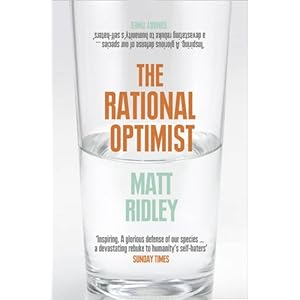
From Matt Ridley, British author of The Rational Optimist:


For the past month, the news has been all bad - war, recession, riot, tsunami, earthquake, nuclear disaster, inflation, cuts... and the cricket.
But while the news is always bad, there has never been a better time to be alive.
The average citizen of earth is wealthier, healthier, wiser, cleaner, cleverer, kinder, more peaceful, more equal, freer and happier than ever before.
Average lifespan is increasing across the globe at the rate of five hours per day. Child mortality has fallen by two thirds in 50 years.
IQ scores are rising all around the world.
London's air and Britain's rivers have never been so free of pollution.
Charitable donations are at unprecedented levels.
The last decade saw the lowest number of deaths in war since 1945 worldwide.
Inequality is falling as poor countries such as India, Brazil and Botswana get rich faster than rich countries such as Britain, America and Japan.
Freedom is on the march - the Russian empire fell, the Chinese liberalised, South American juntas collapsed, Arab despots are toppling.
Soon only a few tyrants will be left - Kim Jong-il, Castro, Chavez, Ahmadinejad, whoever runs Burma and a clutch of increasingly worried African despots in silly uniforms.
And, yes, even happiness goes up as people get richer.
It is easier to be happy when you don't face death, dirt, disease and a long-drop toilet. The average British working man in 1957 - the year Harold Macmillan told us we had "never had it so good" - earned less than a modern father of three gets in state benefits (after correcting for inflation).
In the Fifties it took 30 minutes to earn the price of a hamburger on the average wage.
Today it takes three minutes.
A modern car emits 95 per cent less carbon monoxide, nitrogen oxides and hydrocarbons than it did in the Seventies.
The fatal accident rate of air travel was 13 times higher in 1969 than it was in 2009. The death rate from heart attacks and strokes at any given age has halved since 1970.
I lay out these statistics in my book The Rational Optimist: How Prosperity Evolves.
When I was young, nobody told me any of this.
They said Britain was in decline, the world was running out of oil, the population explosion was unstoppable, global famine was inevitable, an epidemic of cancer caused by pesticides was going to shorten all our lives, nuclear war was coming, the desert was advancing at a mile a year, acid rain was destroying the forests, the ozone layer was shrinking and my sperm count was going to fall.
Yet all the time, inexorably - and unheralded in the news - things were inching better.
New ideas and new technologies were being invented to reduce the time each of us takes to fulfil a need or a wish.
All it takes to improve living standards is to make sure energy is cheap and let people work for each other through trade, to let ideas meet and mate - and innovation follows.
Good as life is compared with the past, the future is going to be much better.
For 200 years living standards have been accelerating upwards because trade and communication have been getting easier.
On present trends the average citizen of earth will be at least twice as rich as the average American is today by 2100 - corrected for inflation.
Yet thanks to the internet, innovation has accelerated.
There will still be wars and natural disasters.
But consider this - your probability of death from a storm, flood or drought was 98 per cent lower in the last decade than it was in the Twenties.

08 October 2010

living in the happiest place in america

National Geographic and Random House are publishing a book about the happiest places on earth, and I'm lucky enough to be living in "Happy Town, USA," where "joy seems to be in the tap water." (Maybe we should stop using our Brita. Har dee har har.)

Funny enough, while the locals are proud to be living in one of the happiest place on earth (Disneyland is going down), they are also worried that hooligans and hordes of tourists will start to invade our lovely little town now that this book and the articles covering the book are coming out.

Truly, though, I was surprised that San Luis Obispo was such a perfect little oasis when I arrived and was waiting for an uglier truth to rear its head-- but it hasn't. And the more areas I discover, the more I'm impressed. And I've barely explored much at all.

Here's what I've seen so far, though. The view from my house, with pine, eucalyptus, weeping willow and a variety of other trees:

I've joined a university women's club, and while the women in the group are mostly quite a bit older than I am, I am having a blast getting to know them. And I get to visit with them and munch on dainty pastries, berries and tea with cream and sugar while enjoying views like this from their beautiful homes. This photo is of the famous Morro Rock in Morro Bay through a nice lady named Lois' living room window:

So, yes, life is good here.

From our house, we can walk downtown in about five minutes, and the residential neighborhood we live in is historic and adorable. Here are what the houses near us look like:

In some ways, I guess it isn't all that different from Disneyland, except less artificial and plastic. And people are incredibly nice. I think of it as old-school Small Town, USA, and while SLO was hailed this time around, I would guess that there are many other places in the States (and in other parts of the world) that are similarly charming and full of nice and happy people.

So, we shouldn't get too full of ourselves just yet. But, according to this Parade article, it sounds like we're too busy being active, enjoying the arts and feeling generally happy to notice all the hullabaloo anyway.

02 September 2009

melbourne , je t'aime

As I said in my Sydney post, Melbourne was my favorite city in Australia.

First disclaimer: I'm biased because we had amazing couchsurfing hosts in Melbourne.
Second disclaimer: we only spent one day and one night in Melbourne.
Third disclaimer: but bite me if that one day and one night weren't just awesome.

So, we flew into Melbourne in the morning, took an easy 20-minute bus ride downtown and then transferred to a tram to go to St. Kilda, the cool Bohemian part of Melbourne where our couchsurfing hosts lived.

It was like Berkeley transplanted in Vienna with trams gliding by. Okay, San Francisco has trams, too, but it felt like a more European version of divey vegan joints. My love for Melbourne has confirmed that I like small cities (à la Boston, San Francisco and now Melbourne) much more than larger ones (like New York, Chicago and Sydney). My cynical side would say it's because of my cheap side, that I'm just bitter we had to pay $60+ to take the metro to and from the airport in Sydney (compared to $1.70 per person on the T in Boston), but I think it's because smaller cities have more character.

Melbourne, for example, is like a jumble of Asia, Europe and the States, it has art bursting from every direction, and the architecture is compellingly diverse everywhere you go. Somehow, though, it forms a vibrant and cohesive whole, and if I were to go to Australia again, I'd just go to Melbourne and the west coast. And Tasmania.

Now, I don't know if Melbourne would be as wonderful without our lovely couchsurfing hosts, Carlo and Yvonne, who took us all over the city, showing us one beautiful thing after another, treated us to dinner and then brought us to a Aussie-rules footy match. But it (Melbourne, that is) is also the starting point for some lovely coastline drives (twelve apostles), Phillip (a.k.a. Penguin) Island, etc.

So, enough blab. Here are the photos, starting with Federation Square, where we first met Carlo and Yvonne and where we caught a free and very cool Len Lye exhibit.

Our first stop was the public library, which was gorgeous and had a mindblowing exhibit on books that changed the world, including an original Chaucer from 1545, a leaf from the Gutenburg bible (1450-1455) and a cuneiform tablet from 2050 BC. They even had a copy of Mao's Little Red Book.

After the library, we just went walking around the city, exploring one cool place after another with Carlo and Yvonne. It's a wonder we only met in person that afternoon because it felt like we were hanging out with old friends.

Here is a brick tower from an old lead pipe and shot factory. Instead of demolishing it, they simply built a glass cone above it (and a shopping area around it):

For dinner, we went to Funky Curry, a little Indian place with delicious (spicy) fare and hilarious quotes on the walls. Like "I wanted to kill the hottest person on earth. Then, I learned there were laws against suicide." And "I like work. It fascinates me. I can sit and look at it for hours." Not exactly what you'd expect with your curry dinner, but I think it made everything a tad tastier.

After dinner, we went to the famous MCG (Melbourne Cricket Grounds), where we watched our first Aussie rules footy match. With elements of soccer, football and volleyball and a referee who throws the oddly-shaped ball in from out of bounds backwards over his head, it's basically Calvinball. And the fans are just as dedicated and rowdy as the Red Sox fans at Fenway. I won't claim to be an avid follower of Aussie footy from now on, but it was one of the best games I've ever seen live. I was even excited approaching the stadium:

It was the only sports venue I'd been to where there was a dress code (collared shirts for men, no torn jeans, etc.), but once I entered the building, I could see why:

It was a full house, and our seats were amazing (thank you, Yvonne!):

It was a great game, and I even found the signs entertaining with their more formal English:

("Time to call your mum?") With a strangely matched photo of men armwrestling.

(Patrons Note: To report antisocial behavior, text the issue and the seating location...)

And finally, a toast to the little Carlton fan who was enjoying his ketchup-covered meat pie:

After the game, we walked back to the CBD and strolled along the Yarra River. It reminded me of walking along the Seine in Paris at night. We passed a band playing next to the river and this row of metal structures that randomly started spewing fire (lots of it, too), and it was all generally dreamy.

Yeah, I know. Lots of the fire photos, but that's because art + fire = mesmerizing.

And if you're still scrambling for something fun to do this Labor Day weekend, you can always try the 3-day novel contest. It's Canadian, but people from all nations are welcome to participate. Have fun!