(noun) 1. the berrylike fruit of either of two African shrubs that, when chewed, causes sour substances to taste sweet. 2. an old-fashioned blog started in 2008 that celebrates world travel and the adventure of life. (This is what blogs looked like in 2008, and it hasn't changed since.)
Hollaback's now Right To Be, but either way, their Bystander Intervention Training is empowering and informative not just for people who want to support our fellow Asians who have been harassed— this is a training that will enable you to help anyone being bullied in any way while staying safe yourself.
PBS is currently streaming (for free) this powerful film on the Chinese Exclusion Act of 1882, and like most of us, I had no idea this was a part of American history. It's heartbreaking that the Chinese were singled out as the only group in American history to be excluded from immigration while millions were streaming in from the rest of the world and how the Chinese were treated when they did try to settle here, and it's a part of our history that should not be forgotten.
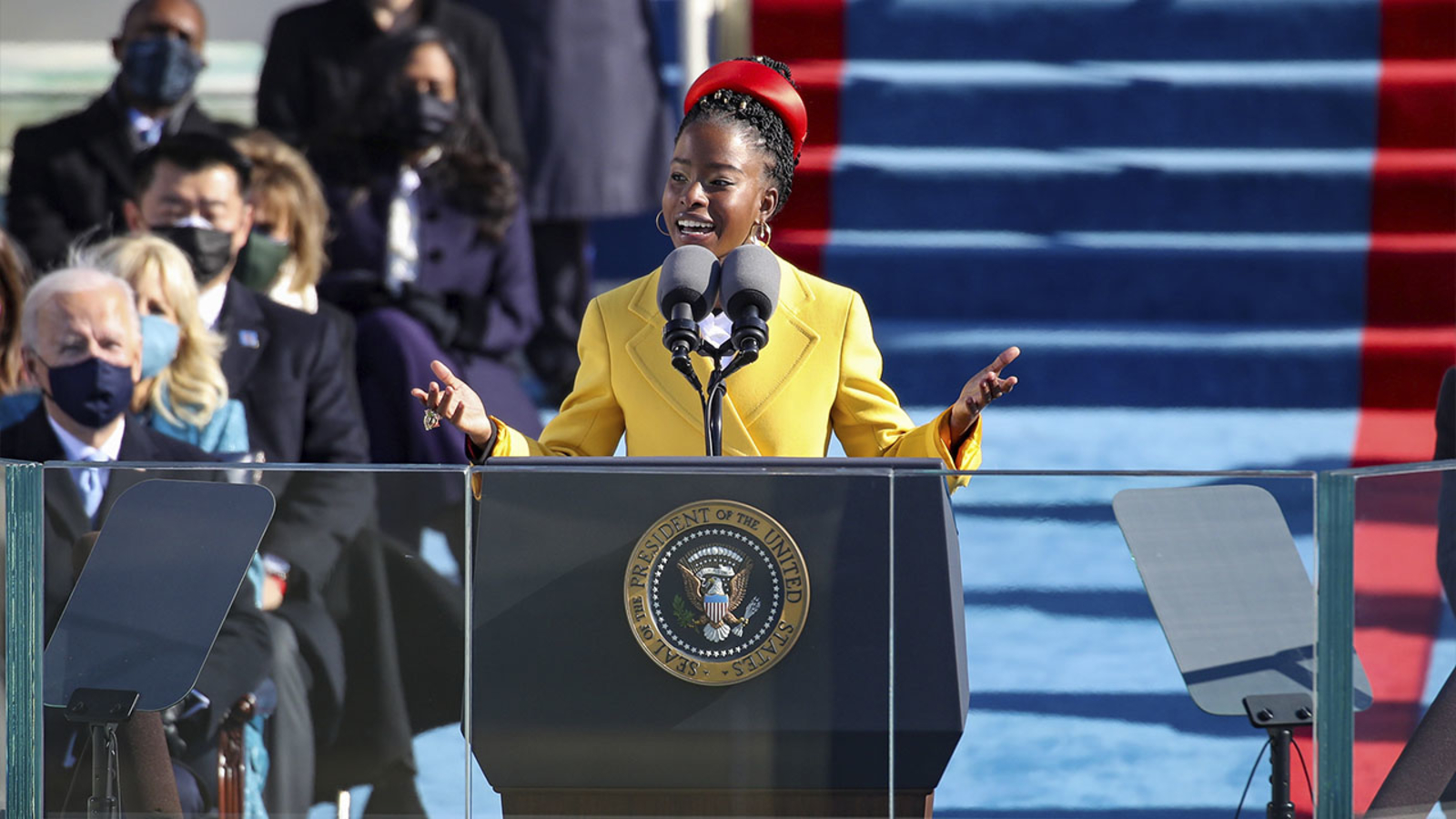
Just when we thought today couldn't possibly have been any better, Amanda Gorman took the stage, blew us all away, and inspired us all.
“The Hill We Climb”
Amanda Gorman
When day comes we ask ourselves, where can we find light in this never-ending shade? The loss we carry, a sea we must wade. We’ve braved the belly of the beast, we’ve learned that quiet isn’t always peace and the norms and notions of what just is, isn’t always justice. And yet the dawn is ours before we knew it, somehow we do it, somehow we’ve weathered and witnessed a nation that isn’t broken but simply unfinished.
We, the successors of a country and a time where a skinny black girl descended from slaves and raised by a single mother can dream of becoming president only to find herself reciting for one. And, yes, we are far from polished, far from pristine, but that doesn’t mean we are striving to form a union that is perfect, we are striving to forge a union with purpose, to compose a country committed to all cultures, colors, characters and conditions of man.
So we lift our gazes not to what stands between us, but what stands before us. We close the divide because we know to put our future first, we must first put our differences aside. We lay down our arms so we can reach out our arms to one another, we seek harm to none and harmony for all.
Let the globe, if nothing else, say this is true: that even as we grieved, we grew, even as we hurt, we hoped, that even as we tired, we tried, that we’ll forever be tied together victorious, not because we will never again know defeat but because we will never again sow division.
Scripture tells us to envision that everyone shall sit under their own vine and fig tree and no one should make them afraid. If we’re to live up to our own time, then victory won’t lie in the blade, but in in all of the bridges we’ve made.
That is the promise to glade, the hill we climb if only we dare it because being American is more than a pride we inherit, it’s the past we step into and how we repair it. We’ve seen a force that would shatter our nation rather than share it. That would destroy our country if it meant delaying democracy, and this effort very nearly succeeded. But while democracy can periodically be delayed, but it can never be permanently defeated.
In this truth, in this faith, we trust, for while we have our eyes on the future, history has its eyes on us, this is the era of just redemption we feared in its inception we did not feel prepared to be the heirs of such a terrifying hour but within it we found the power to author a new chapter, to offer hope and laughter to ourselves, so while once we asked how can we possibly prevail over catastrophe, now we assert how could catastrophe possibly prevail over us.
We will not march back to what was but move to what shall be, a country that is bruised but whole, benevolent but bold, fierce and free, we will not be turned around or interrupted by intimidation because we know our inaction and inertia will be the inheritance of the next generation, our blunders become their burden. But one thing is certain: if we merge mercy with might and might with right, then love becomes our legacy and change our children’s birthright.
So let us leave behind a country better than the one we were left, with every breath from my bronze, pounded chest, we will raise this wounded world into a wondrous one, we will rise from the golden hills of the West, we will rise from the windswept Northeast where our forefathers first realized revolution, we will rise from the lake-rimmed cities of the Midwestern states, we will rise from the sunbaked South, we will rebuild, reconcile, and recover in every known nook of our nation in every corner called our country our people diverse and beautiful will emerge battered and beautiful, when the day comes we step out of the shade aflame and unafraid, the new dawn blooms as we free it, for there is always light if only we’re brave enough to see it, if only we’re brave enough to be it.
My friend, Vernie, used to always say what our overpopulated world really needs is a new plague that can indiscriminately take out a big chunk of the world's population, and while the coronavirus isn't that, I do think there is a silver lining to this cloud.
Obviously, I don't want innocent people dying or even feeling sick. I don't want to see people I love freaking out and buying hazmat suits because they're so scared of what could happen. My heart goes out to the people who are really stressed about schools closing and wondering how their kids who depend on the free lunches are going to eat— not to mention how they're going to work and make sure their family is both safe and also that all of the bills will be paid.
And yes, it's stressful to go shopping and find that Costco is out of toilet paper and Trader Joe's is out of eggs, and you end up buying a case of bottled water even though your fridge has water because everyone else has carts filled with them. The stress is palpable and heavy, spiking and charging the very air we share, everywhere we go now.
It's hard to wrap our heads around all of the schools being closed and basically everything "normal" being canceled. My daughters' school will be closed for at least a month. My husband's work has given everyone two weeks off for spring break, and everything will happen remotely the two weeks after that. So, that's a month for him to be home, too.
This weekend, my daughter didn't attend Girl Scouts or a birthday pool party. My husband and I skipped a wine tasting party, and I was going to miss my acting class— until it was canceled.
We're canceling our spring break trip to Mexico to explore ruins with cousins and siblings. We're canceling our summer plans to go to Taiwan so my daughters can learn Chinese. I love travel and am sad to let those adventures go, but I also recognize how lucky I am to be "stuck" somewhere pretty nice and continue to strive to find the bright side of all this.
So, as we grapple to find our new normal, here is something to consider.
What if the world's problem is not coronavirus? What if our collective ailment is our competitive go-go-go mentality that has left everyone feeling increasingly isolated and stressed? What if the coronavirus and our now enforced quarantine is the solution?
I know this will not be a popular opinion, but I think maybe staying home and slowing down is just what we all need.
Maybe we were so pigheaded about going forward forward forward (or what we perceived to be forward), unable to even consider slowing down, that it took something as crazy as COVID-19 to literally knock the wind out of us, grabbing both of our arms and stapling us to the floor, to force us to snap out of our whirlwind lives and STOP for a second to look around and consider our lives.
I can imagine someone rising from the dust of being thrown to the ground, shaking their head in a daze as they look around, like Dorothy waking up in Oz. Except this is our real life that we maybe allowed to go on autopilot for too long.
How did I get here? Is this the life I want? Am I giving the world all that I can? Am I on the path that best serves me and my family? Am I pushing myself in the best ways-- growing, contributing, leaving a lasting positive impact on our collective world?
Maybe the coronavirus is actually a wake-up call to live our lives more fully.
If you're an adult, is this the grown-up life you'd dreamed of living when you were a kid?
If you're a parent, I can imagine the dazed head shaking and saying, "Wow, my daughter/son is how old now?" It can almost bring me to tears when I think of my young children— weren't they just babies a second ago? Where has the time gone? Have I done enough and loved them enough as a mama? What if the rest of their childhood passes in a blur, and I miss it? I can't let that happen!
If you're an even more mature adult, have you used your decades on this planet to serve humanity, gather wisdom, and share love and kindness to all? (Because you know, all people are supposed to have done that by the time they're old, right?)
We have more control than we think, and we can all live lives that we want. It's not just a luxury for the ultra rich (who I have not perceived to be happier or more free).
Within our mundane everyday lives, we can find sparkling moments of joy and love and connection and meaning, but we have to create the space and time for them— and many of us don't seem to have even a nanosecond to stop and breathe. (Hi, parents of young children! Hi, entrepreneurs giving our sweat and blood to nothing more than an idea! Hi, caretakers devoting yourselves to someone else's every day quality of life! And everyone who is giving their all to the struggle that is everyday life! I see you!)
Enter: CORONAVIRUS.
Now, even the world's #1 workaholic has an excuse to just sit down for a second and look around. And that's a form of grace and forgiveness. We all get a break.
So, while not glamorous or exciting, my family is doing a deeper cleaning/organizing of our house today-- something we never have time for. All those random doodads (my girls' "art supplies") that have been stashed here and there are now going to be given proper homes or discarded.
We've been looking at recipes we've been meaning to try but haven't had time for.
My 4-year-old says we should snuggle and read stories all day, and for the first time, it's an idea that we could actually consider.
Of course, we haven't even gotten to day 1 of a month of no school, so ask me how I'm feeling again in a couple days, and I might be ready to drop kick my fighting, complaining kids to outer space, but in the meantime, I'm going to try to find my place of peace and love. And remember to be grateful that for whatever unfathomable reason it might be, I'm given a little extra space to breathe right now.
There's something beautiful in stopping and looking around every once in a while, and I'll try to make the most of it.
Andrew Yang, a Democratic candidate for President, is making waves as the first candidate to formulate his policies based on data and research, instead of ideology.
He is a decent family man and a patriot, not a politician — who wants a better future for his kids.
Yang believes in “human-centered capitalism”. He cannot be easily classified into a traditional category such as liberal, libertarian, conservative, or leftist. In fact, his two slogans are “Not left, not right but forward” and “Humanity first”.
But should you vote for him in the Democratic primaries? Here are 12 reasons why you should:
1. He is the candidate most likely to beat Donald Trump
Study was done using data from Economist polling data
The candidate most likely to defeat Donald Trump will attract the highest number of voters who voted for Trump in 2016. Although Andrew Yang does not like to talk about Trump and would rather focus on issues and solutions, based on polling data Yang is the best choice to beat him in the general election.
In this analysis of weekly polling data from the highly regarded Economist / Yougov polls, an independent data scientist calculated which candidate would most likely beat Trump. Yang is at the top of the list because of his strength with both former Trump voters (12%) and disaffected voters (53%), both higher than any other Democratic candidate.
This matches up with anecdotal evidence that I’ve seen. When I ask Republicans if there are any Democrats they would vote for, the most common answer I hear is Andrew Yang. Yes, many Republicans won’t vote for a Democrat, but the ones that would vote for Yang give reasons ranging from Yang caring about the working class and not playing identity politics to not bashing Trump voters. Well known conservatives Tucker Carlson and Ben Shapiro are fans of Andrew Yang.
2. Innovative Health Care Plan
Universal Basic Health Care lowers costs for everyone, keeps private insurance
When forming his healthcare plan, Yang was careful to examine the policies of dozens of different countries to see what works and what doesn’t. He also is laser focused on fixing the fundamental issues of why our costs are so much higher than other countries
Some aspects of the plan are modeled after the Taiwan health care system, which is rated the number one health care system in the world. Co-pays are low, premiums are income based and are free for the poorest in the country. There is a strong emphasis on reducing drug prices. This plan is offered to everyone, but people can supplement the plans privately. Yang is also the only candidate that has explained in detail how he would lower costs — for example, by using international reference pricing for drugs.
Only Yang has put together a five-pronged climate change plan that A) gets us carbon neutral to slow down the rate of climate change, B) ends the influence of lobbyists and oil executives, C) addresses how to deal with climate change refugees, D) has a plan to explore new technologies that reverse the effects of climate change that has already happened, and E) puts us at the center of a new global sustainable energy sector. His entire plan is here.
Yang has also made it a top priority to influence other countries like China and India do their fair share, as the USA is only 15% of global emissions and cannot slow climate change on its own. Since China is actively exporting coal-based power solutions to foreign countries, Yang will have the USA take the lead in offering environmentally friendly alternatives at better prices.
4. The leader in fighting corporate influence in politics
For many voters, reducing the influence of lobbyists and corporations in politics is their number one concern. Yang, with an A+ rating, is rated #1 for democracy reform by equal citizens. Equal Citizens is respected by all and is considered the gold independent standard for rating candidates in this area. View his rating here.
From EqualCitizens.us
The reason for his A+ rating is his flagship policy, Democracy dollars, which gives every US citizen $100 annually to donate to the political campaigns of their choice. This would total a figure 20 times greater than the amount of money being injected by corporate interests. It would effectively wash out corporate and lobbyist money in politics without having to do the nearly impossible task of overturning Citizens Unitedsupreme court case. This policy is considered groundbreaking, and many other Democratic candidates are adopting some form of it.
Yang and many others firmly believe that without solving the problem of corporate and lobbyist influence, passing laws that benefit the entire country will be exceedingly difficult, hence this will be one of his top priorities.
5. Yang is laser-focused on solving the problems of the working class
He wrote a book on it
When you ask people why they are voting for Yang, many of them say it was after reading his NYTimes best-seller book, “The War on Normal People”. (No, I’m not trying to sell the book). In the book, Yang talks about how automation, software, technology and artificial intelligence is rapidly changing the economy and how it is starting to affect the labor market. He explains exactly why Trump was elected, how some of Trump’s solutions to the problems are misguided, e.g. getting rid of all immigrants, and what the real solutions are. Even many of the other presidential candidates like Warren are reading Yang’s book.
To summarize, Yang uses data to demonstrate it wasn’t immigrants, or just trade policy, but artificial intelligence, software, robotics and automation that displaced ten million manufacturing jobs in the midwest. Yang shows there is a direct correlation between these job losses and the states voting for Trump. Yang shows us how some worker retraining programs are misguided as they have high failure rates — not everyone can or should become a coder. Instead, we need a new social contract. We need to take steps to prepare ourselves for a new type of economy that is rapidly forming, one with very few jobs for “normal” people.
6. More complete set of policies than any other candidate
Policies like owning your own data and ending predatory loaning
With over 160 robust policies on his website, Yang has mapped out what he would do as President in much greater detail than any other candidate. Yang has thought through his plans carefully through to their execution. This level of transparency is unheard of in politics, and many voters list his transparency as one of the reasons they are voting for him.
Data as a property right is an example of an innovative policies that the general public is rallying around. Our most personal data is being collected, sold and abused; Yang is committed to putting a stop to this.
7. Yang’s Universal Basic Income would instantly end poverty
Yang points to studies that show people would not stop working with UBI. And it takes the boot off people’s throats.
One of Yang’s flagship policies, a Universal Basic Income (UBI) of $1,000 a month for all US citizens over 18, would instantly end poverty in this country It would also allow families to spend more time with their kids, and helps people avoid exploitative relationships, and would completely revitalize the economies in small towns. It would improve mental health levels, allow people to start small businesses, and it would allow senior citizens to retire with dignity.
Yang’s UBI plan is endorsed by top economists, and paid for by a tax on the winners of the 21st-century economy, like Google, Amazon and Facebook.
In Alaska, residents get an oil dividend check every year because the Oil industry does so well. Yang’s UBI, which he calls the Freedom Dividend, is basically a tech check for being a shareholder in the richest economy on the planet.
Yang concluded that UBI was essential in this country, because of the rapid devaluation of the labor market. Yang mentions 4 main reasons we need UBI — the rapid rise of software, technology, artificial intelligence replacing jobs which is due to accelerate in the next 5 years, the change to a winner-take-all economy, the fact that 90% of new jobs are low-paying gig or contract jobs, and a study that shows 85% of all Americans live paycheck to paycheck at some point in the year.
Yang often points voters to numerous studies on UBI that shows that people on UBI continue to work at the same rate, except for two groups: women who stay at home to take care of their kids, and teenagers who stayed in school longer. It would also grow the economy by 12%.
Critics wonder if UBI would just push up prices all around, but economists generally agree that would not happen because of price competition, except possibly to some degree in the housing market. Yang has pledged that any passage of UBI would include policies to deal with rising housing prices.
8. A Candidate that best understands the true problems of the 21st century
The real problems that we will be facing over the next ten years, and our children, include job loss due to technology, software and automation; a new artificial intelligence arms race with China; increased cybersecurity threats; social media addiction; opiate addiction; income & economic disparity due to a new “winner-take-all” economy.
Yang has the best background and experience to fully understand these threats, and having solid plans to deal with them has been a centerpiece of his campaign. Yang ran a health-care technology startup for 5 years, was the CEO of a test preparation company for 6 years, and ran a non-profit called Venture for America for 9 years that created jobs and create fellowship programs for college graduates throughout the midwest.
Yang is not just planning for the present, but for the future of our country.
9. Yang realizes we can’t chase the almighty dollar forever
American scorecard and Human Center Capitalism is where he believes must go as a society
Yang has identified the race to maximize GDP (Gross Domestic Product) as one of the biggest threats our country faces, as it creates all the wrong incentives in all the decisions corporations make.
Our country and corporations have focused on maximizing GDP at the expense of our physical and mental health, childhood success rates our life expectancy (which has actually been decreasing), our happiness, and our environment. Yang has detailed plans on how to address this, including a new American Scorecard, and has promised to give a powerpoint presentation every year to show how much progress we are making towards our new metrics. The American Scorecard will ensure the country focuses not just on economic output.
Yang will lead our country to focus on not just GDP, but these metrics:
Andrew Yang’s “American Scorecard”
Yang’s vision is called Human-Centered Capitalism, which means we use capitalism to benefit ourselves — humans, and not just corporate entities and their shareholders. It means that we must value humans over money. It is a fundamental shift in how we think about our country and our purpose, one that will significantly improve the future for ourselves and our children.
10. Yang is focused on making the country better for your kids
Kids growing up in this country will be facing a harsh reality. 90% of new jobs will be temp, gig or contract work. The cost of a 4-year college is $140,000. Climate change is changing the planet, active shooter drills are the norm. Why are things going so poorly? Yang is laser-focused on solving these problems and leaving a country to our kids that we can be proud of.
Yang’s solution includes the following:
Focus on the root causes for the rapid increases in the price of education, housing and health care — ballooning administrative costs at universities, NIMBYism gone too far, and backward incentives and an artificial shortage of doctors in health care.
Make health care affordable and take it off the backs of small businesses
Research cutting edge technology to attempt to roll back the effects of climate change
Focus on improving the mental health of kids by improving home life, reducing social media addiction, and eliminating harmful active shooter drills which Yang believes do more harm than good
11. Yang is focused on Women’s issues
Yang has seen a surge of support from women recently as he has made women’s issues a cornerstone of his campaign from the start. In every speech, he talks about how Universal Basic Income allows women to escape abusive relationships, leave harassing bosses, and choose to be a stay at home mother if they so choose. He also gives frequent lectures on reproductive rights and the importance of giving women equal opportunity in the highest echelons of the workplace.
His policies for women’s issues include putting more women in leadership positions, women’s right to choose, paid family leave, working conditions during pregnancy, equal pay and assistance for single parents.
12. Has a solid plan how to tax the corporations paying zero in taxes
Amazon, IBM, Duke Energy and over 90 other major companies have paid zero in taxes the last couple of years. Only Yang has a detailed policy that ensures these companies pay their fair share of taxes, through a value-added-tax on business to business transactions that make up the bulk of these companies’ revenues.
In this new data-driven winner-take all economy, Yang realized that our citizens cannot benefit if companies don’t pay their fair share.
Here’s a newsweek article on how Yang will give Americans a slice of the 21st century economy in a trickle up fashion.
Bren on the Road is a great blog for travel bloggers (and people interested in becoming travel bloggers), and he just wrote a thought-provoking piece about why bitcoin is going to win. It just might blow your mind. Enjoy.
This isn’t an article about Bitcoin.
I’ll forgive you for thinking so, because of the title. But it’s not. It’s an article about travel, people, life, and the amazing world around us.
Let me tell you a story.
When I visited Tanzania for the first time, the security guard at my hostel was a Masai. The Masai are a tribe in East Africa that still maintain much of their traditional lifestyle. They live in faraway villages, herding cows, sleeping in huts made of mud and dung. Usually there is no electricity or running water.
The guard and I became friends, and after several weeks, he invited some of us out to his village for a night. We must have walked at least thirty minutes from an open road in the middle of the countryside to get to this village. It was exactly as I imagined.
His mother cooked dinner for us that night in a tiny hut on an open fire. We slept in another tiny hut; three of us shared a bed – a Masai warrior, a white boy from America and a little Chinese guy, all spooning like dominos – because that’s the only space they had. We drank milk straight from the cow. We brushed our teeth using sticks from a special tree, with sap that tasted like cinnamon.
But here’s the strangest thing I remember:
That night, while we were all sitting around the fire, eating corn and drinking beers, one of these Masai guys pulled out his Nokia phone and added us on Facebook. This was in 2011. I was still using a flip phone back then. I didn’t get an internet phone until 2012.
How does a guy living without water, without electricity, in a remote village in Tanzania, get internet on his phone before me – a Chartered Accountant earning thousands of dollars per week in New Zealand?
What I’ve described here is a technological phenomenon that swept through Africa during the early 2000’s. In many African cities, there are no landlines. Most people have never seen a landline phone before, except in the movies. They went straight from sending letters in the post to sending text messages on a Nokia. For many of them, a Nokia cellphone is the first phone they have ever used.
The term for this is “leapfrog technology”. Kids are probably studying it in economics now. It occurs when a community is so far behind, they end up skipping an entire generation of technology and going straight to its successor. It has happened numerous times in recent history, and with it, goes the disappearance of another industry. Go and check how many fax machines have been sold in Africa. They have probably never heard of the fax machine.
That’s the problem with infrastructure; it’s permanent. Once you lay down a railroad, that’s what you’ve got. You can’t change it every year, like a website. That means it’s great, until it isn’t. You put down phone lines, and twenty years later you need to spend millions of dollars digging them all out again. While you’re spending all your time and money on that, the guy who couldn’t afford those lines in the first place is starting to build cellphone towers. It happens all the time. It’s just that most of us do not realise this, because we don’t live long enough to see the full cycle. The only way to see the full cycle, is to have a time machine.
Plot twist: We do have time machines. They’re called airplanes. If you fly to Ethiopia, Uganda, Cambodia, Bangladesh, Nicaragua – it’s a trip back to the 1940’s. People are still killing chickens in their backyard and fetching water from the river. There are people who have never used a microwave, or even an oven, or even a stove top. They’re still cooking every meal over an open fire. I’ve met people who have never heard of McDonald’s. They don’t even know what a fast food chain is. They don’t have bank accounts – in fact, they have never even seen a bank.
Yet they have Facebook. They know how to Google.
Look at this photo:
This picture is from a few years ago. The girl playing with my iPhone is 8 years old. Her house doesn’t even have basic plumbing. No taps. Their toilet is still a hole in the ground. No electricity. No water. Never seen a landline phone in her life.
But all the adults in her family have cellphones. She knows how to reach me on Whatsapp.
This is what leapfrog technology looks like.
It sounds bizarre, but on the road, you see this kind of thing all the time. There have been many leapfrog technologies, and there are going to be many more. Here’s another example of one I see happening already:
In many countries, especially in Africa, the public transport is abysmal. If you go to Nairobi right now, they use recycled vans as public transport. They’re using old, imported, twelve seater vans, on the verge of falling apart, and they cram 14 or 15 people in. They charge them about 50 cents each and they sit in Nairobi traffic, crawling slower than a tricycle. It takes hours to get anywhere. That’s public transport in Nairobi right now. I’ve used this exact system in many countries across the continent – Uganda, Zimbabwe, Tanzania, Ethiopia. But many of these countries will never dig up their roads and lay down a subway system. They’ll go straight to the next thing, maybe Elon Musk’s crazy hyper-speed tunnel or, self driving Uber buses. Nobody knows. But they’re going to leapfrog the subway, just like they did with the landline.
This is what leapfrog technology does. It’s why the Chinas overtake the Japans, and the Indias overtake the Britains. It’s why Shanghai’s metro system makes the New York subway look like a toy train set.
And it’s also the reason Bitcoin is going to win.
Let me build on this with a second story.
I send money to Tanzania every year, usually two or three times, to pay school fees. It’s a couple of thousand dollars maybe. The first time, I tried to send a SWIFT payment directly to the school bank account. You might have heard of SWIFT. It’s an interbank technology from the seventies. My payment got bounced twice. Each time, the bank returned the money, minus $100. That’s the best technology banks have right now. They need a week and $100 to tell me “Sorry, we couldn’t send your money.” I will soon explain how this is going to turn banks into the next fax machine, although the reasons are probably pretty clear to you already.
Then I started using Western Union for a few years. Western Union is fast, but it’s expensive. It’s disgustingly expensive. When you work out the loaded exchange rate, plus the fee, Western Union ends up taking a cut of around 8%-12% each time. This is why Western Union is also going to be the next fax machine. When you shave 12% off the remittances of the poorest people in the world for two decades, people are going to turn you into a fax machine pretty quickly.
Last year there was another small improvement. My people in Tanzania finally have a bank account, so I sent money to their account via Xendpay. Here’s how that works – I send money to Xendpay on my credit card. Xendpay takes a cut. Then they change the money to USD and send it to the Tanzanian bank. The Tanzanian bank takes a cut. Then they change the USD to Tanzanian shillings. They take another cut. Then they deposit it into my friend’s bank account. When she makes the transfer to the school, the bank takes another cut. The whole process takes about five days. The total cut by middlemen is about $60.
Five days. Sixty dollars. Cheaper than a bank. Cheaper than Western Union. Still pretty shitty.
This probably seems normal to you, because that’s how banking is. You’re probably thinking, what is this guy complaining about? If you send money to another country, it’s going to take a few days. Just plan ahead, what’s the problem? You gotta pay a fee? That’s life. What’s the problem? Deal with it.
Here’s what that sounds like to me:
When you do a school project, you just Google the topic and find out whatever you need to know in five seconds, right?
Well here’s what I used to do: I’d wait until the next day before doing anything. Even if the project was due soon and I hadn’t started, I’d wait until the next day. Why? Because the library was closed. I’d go to school early the next day, go to the library and get the books I needed. Then I’d pay 10 cents per page to photocopy it all. It would cost me two or three dollars probably, to photocopy everything I wanted. If you’re in school right now, you probably don’t even know what a photocopier is. It’s a machine that does exactly the same thing as your phone camera, but it’s the size of a dishwasher and can only do black and white. Then I took my pile of photocopies and took them home to work on my project. That’s how we did school research in the nineties.
Why am I telling you this?
Because waiting two days to go to the library and paying $3 to photocopy all the information you need is the exact same problem as waiting five days for a bank transfer to clear. It’s a problem. A big problem. You just don’t know it yet, because when it comes to banking, you’re still using a fax machine. You’re using the fax machine because Whatsapp hasn’t been invented yet. But the banking equivalent of Whatsapp is coming soon. In fact, it’s already here. Bitcoin is the banking equivalent of Whatsapp. That’s why Bitcoin is going to win.
When I talk about Bitcoin, I’m talking in general terms. I’m talking about cryptocurrency. I’m talking about the blockchain. A lot of the things I do are digital – I run all my businesses on the internet – so I have already been involved in this new way of banking. I have paid for things in Bitcoin. I have paid for things in Litecoin. I have paid for things in Bitcoin Cash. I have paid for things in Ether. When I talk about Bitcoin, I’m talking about all of those. And I’ve seen them work. I’ve seen people using a Bitcoin debit card. It works exactly like a normal debit card. It’s connected to your Bitcoin wallet, and you can go swipe it at 7-Eleven and buy a donut with your Bitcoin. For those that are saying it’s not real money, it is real money. You can buy donuts with it right now in 2018. It works.
Here’s where it gets exciting.
When you send Bitcoin to someone, it can be anyone. It can be anyone, anywhere in the world. They do not need to put on their shoes and go down to the bank with two forms of ID, a statement of their water bill and $100 in cash to set up a bank account, then wait two days for all that information to clear, then return to the bank two days later to add a pin to their debit card so they can finally withdraw the money. You think that’s an exaggeration? Ask anyone who’s moved to London lately and tried to set up their bank accounts. It’s not an exaggeration.
But all that doesn’t matter anymore. You can now download an app on your phone, and I can send Bitcoin or any other cryptocurrency to you, anywhere in the world. Depending on the currency, it will take less than a few minutes. It might even be instant. It will cost around ten cents, probably.
“But Bren, why do I need that? I have a bank account already, I can withdraw money instantly from any ATM in the world, I can pay for everything in five seconds with my VISA debit, I can log on to my internet banking and open a new account whenever I want. Why do I need Bitcoin?”
The answer is: You don’t. And if you live in Australia, New Zealand, America, Europe, probably your friends don’t either. But you’re completely missing the point.
Here’s something to think about. Next time you travel through Thailand, go down to the fruit cart on the corner and try buying your breakfast with a VISA debit. I can tell you now, you’re not having breakfast that day.
If four million people in New Zealand don’t need Bitcoin, that’s fine. They can keep using their bank. If 300 million people in America don’t need Bitcoin, that’s fine too. But there are two billion other people in the world who don’t have a bank account. If you’ve time travelled, you would have met them. About a billion more have nothing but a basic checking account which they never use. This is almost half the world. I meet these people all the time. These people have remained unbanked, completely excluded from economic opportunities of the last fifty years, because banks have no interest in banking them. Banks are not interested in opening an account for the peanut guy so he can deposit $1.50 into his savings account each day. There is no money to be made from the 100 people who sell corn to each other living in a village 200km out of the city.
But what those people have is a $100 Chinese smartphone. Just like my Masai friend in Tanzania. They have a data connection. And they have a little solar panel, about the size of a cereal box, to charge their phone every two days. I have gifted several of these to people in Tanzania, they cost about $11 and look like this:
Now, let’s say these people want a bank account. You tell these people they have two choices.
Choice A: They can download an app on their phone and within the hour they can send and receive money to anyone, anywhere in the world.
Or, Choice B: They can walk to the main road, sit on a bus for two hours, go to the citizen’s office and apply for a passport so they have a form of ID, wait three days, then get on the bus again and go pick up the passport, then go and wait in line at the bank for an hour (because in an African bank you will be waiting for at least an hour), ask to open up an account, and then every week take the same two hour bus ride into town to deposit money into their savings, while also paying $5 per month for the rest of their life to keep that account open.
Which one do you think they’re going to choose?
This is why banks are going to get leapfrogged. This is why Bitcoin is going to win.
Here’s another reason why Bitcoin is going to win: We already know it works. In Africa, they already have a Bitcoin clone. It’s called M-Pesa. If you’ve never heard of M-Pesa, it’s a digital money that originated in Kenya in 2007. It went like this:
The Kenyan cellphone provider, Safaricom, had a function on their sim cards, where you could send credit or ‘minutes’ to people. The interesting thing was, since everybody had a cellphone the value of a “minute” was universal, just like money. So, people started using it like money. Maybe you get a taxi, you forget your wallet, and you say to the driver “How about I just send you some minutes instead?” This became so common that Safaricom built an official system for it, now known as M-Pesa (pesa is the Swahili word for money). Today with M-Pesa, anyone with a sim card, even on the crappiest $10 cellphone, has an instant bank account. They can pay and receive money from anyone instantly via a simple text message. This was only launched ten years ago. Today, M-Pesa accounts for 48% of Kenya’s GDP. Everybody uses it. This is why many people in Kenya don’t even have a bank account. They don’t need one. They leapfrogged banking.
But there’s a catch. Kenyan M-Pesa only works in Kenya. I can’t send money from New Zealand to an M-Pesa account. I’ve tried. There’s also a transaction limit, of around $500. But here’s the second catch: Bitcoin is just like M-Pesa. Only Bitcoin transactions are limitless. And they’re global.
Bitcoin is like M-Pesa for the whole world.
Right now, this means nothing to most people. Most of you have zero need or desire to send money instantly to Kenya. That’s fine.
But I want you to think bigger. I want you to think about how much your life can change when you can be paid by anyone in the world, instantly. If you can receive money from anywhere in the world, instantly. I earn money in about five different currencies. I’m waiting for money to clear all the time. This will be amazing for me. But even if it doesn’t excite you, you don’t need to care right now. Just like you don’t need to use Google to research something. You can still go down to the library and photocopy a textbook if you want. But that is not where the world is going.
Let me show you something. I travel everywhere with a travel wallet. In that wallet I have my passports, my visas, bank statements, credit cards, and I also have cash. Here’s what that cash stash looks like right now:
Do you know what this is? This is the equivalent of a photocopied textbook. This is the equivalent of sending my emails by fax machine. I can guarantee you kids in ten years will look at this photo and have no idea what they are looking at. I’m not collecting these currencies. This is just leftovers I’ve unintentionally accumulated over my travels. Why have I accumulated them? Because I can’t spend them. That’s because each of these pieces of paper can only be used in one very specific corner of the world. If you think about it, that’s ridiculous. Currency is one of the last areas of our lives to be globalized by the internet, and it’s the one that most needs to be. This is why Bitcoin is going to win.
Let me give you a more real-life example. If you go to the border of Kenya and Tanzania, you’re going to see a lot of cash changing hands. It will be people such as little souvenir sellers on the streets selling bracelets to tourists from around the world. What you’ll notice is they are not using one currency. They aren’t even using two currencies. You ask any of those people – souvenir store owners, waitresses, drivers, to pull out the cash in their pocket, and it’s going to be a mix of Kenyan shillings, Tanzanian shillings, US dollars, Euros, maybe even some South African Rand and British pounds. Ask any of them what the exchange rate is, and they’ll be able to tell you, because they change money every single day just so they can buy dinner. I have even tipped a guy in Africa, around $50, all mixed in three different currencies. He didn’t even blink. You do that in New Zealand and the guy will laugh at you, thinking you’re joking. You do that in Kenya, it’s just normal business.
This is a broken system. It is ridiculous that if I’m in Poland, I must buy my apples with Polish zloty, but travel a few hours over to Germany and I have to use Euros. They’re the exact same apples. The money is worth the exact same amount. But they’ll look at the zloty and say, sorry, if you walk two hours that way, you can buy an apple with the purple piece of paper, but here, you need to use the pink piece of paper. Isn’t that ridiculous?
Perhaps, it doesn’t sound that ridiculous to you, because that’s how it’s always been. Except that it hasn’t. We’ve had global currency before, just not in your lifetime. Imagine a hundred years ago if the store owner said, “Sorry, your gold is in the shape of a circle. I only accept gold in the shape of a triangle.” That’s moronic, but that’s exactly how it is today with currency. This is because when today’s money was invented, they didn’t plan for this. They didn’t plan for people in Denmark to fly down to Italy for a shopping weekend with a pocket full of Danish Krones. They didn’t plan to have bloggers that earned money in ten different currencies. They didn’t expect to have companies like Facebook that do business in literally every country in the world, and now during tax season they have to ask their accountant to convert all of that money, literally hundreds of currencies, back into USD. There was no internet. There were no computers. That’s why our money infrastructure is a fax machine. The USD is a fax. The Euro is a photocopied textbook. These are the kind of infrastructures that get leapfrogged.
But again, this probably doesn’t affect you. Maybe you live in Canada, or Australia, you go travelling once a year. Why should you care what money they’re using on the border of Kenya and Tanzania?
I’ll answer that question with a question. Where do you think the global growth is going to come from in the next two decades? You think it’s coming from Australia? It’s not. Take a guess what the fastest growing economy is forecast to be in 2018.
It’s Ghana.
Second fastest? Ethiopia.
Then India. Then Ivory Coast. Then Djibouti (source). Most people don’t even know Djibouti exists. But they will soon. You can follow this trend all throughout history. Massive economic booms have always been spurred by large, young, underdeveloped populations. It’s why every empire dies and a new one emerges.
That is happening right now. I have seen it with my two eyes. While you’re sitting there thinking Africa is just made up of corn farmers, there are young Kenyans, South Africans and Nigerians huddled in co-working spaces, brewing some of the fastest tech-startup scenes in the world. While you’re sitting there thinking, “Oh yeah, nothing wrong with libraries, nothing wrong with fax machines, nothing wrong with waiting two days to open a bank account” they are sitting there sending M-Pesa, receiving Bitcoin, and writing code that is going to leapfrog them into the next internet.
Africa has the youngest population in the world. They have the fastest growing population in the world. And that is only Africa. You also have the Americas, Eastern Europe, Southeast Asia, the Middle East – all young, fast-growing populations that now have the opportunity to be a part of something. They are no longer shut off to the world thanks to the internet. And now, in the very near future, they will no longer be shut off from banking thanks to the blockchain. When these people start getting access to banking, funding, international trade, credit, things are going to move. And I guarantee they will move faster than anyone imagined.
This is why you should care. Because these people are now all potential partners. They are also potential customers. But most importantly, they are potential competitors. Bitcoin has allowed that to happen. That is why Bitcoin is going to win.
If you’ve made it this far, you might still have one burning question. A really important one. What the hell is Bitcoin?
The answer is: It doesn’t matter.
I want you to take 60 seconds right now to watch this video:
You show that to an 18 year old, their eyes will pop out of their head. They’ll probably think this video is from the 1920’s. But it’s from 1994. That’s what the internet was just 25 years ago. It was something so revolutionary, so unlike anything we’ve ever seen before, that nobody was able to wrap their head around it.
The point: It doesn’t matter if you know how Bitcoin works. You don’t know how the internet works either. Try and explain to me in two sentences how the internet works. You can’t. Nobody can. But we use it every day. People send billions of dollars over it every day. You don’t need to know how it works. You just need to know that it does, and that it’s better than the thing we had before it.
Here’s a third and final story.
One of the funniest things I do when I meet a teenager at a hostel is I tell them about the cassette player. We’ll be listening to music in the lounge, and I’ll tell them what it was like to have a Walkman cassette player back in the day.
“If you wanted to hear a song, you just had to turn on the radio and wait. I used to sit in front of the radio for hours, waiting for a song to come on. And I had a cassette in the deck, ready to record. You could fit maybe 15 songs on a cassette. I’d spend an entire Sunday sitting in front of the radio waiting for songs to come on so I could record them. And then I would spend all night listening to them on my cassette player. The funniest thing was, on a cassette, you can’t just skip through songs by clicking a button like you can on iTunes. If you wanted to listen to a specific song, you had to click the rewind button, and the cassette player would go zrrrrrrrrrrr, and then you had to guess when to stop it. You had to guess, to the exact second, where your song was going to be.”
They always look at me when I tell them that story and think I’m joking. It doesn’t matter what country they’re from. It’s the same reaction. I have to go on Youtube and show them what a cassette player is.
And then while we’re on Youtube, I tell them about MTV.
“You know when we wanted to see a music video, we had to wake up early on Sunday morning and turn on MTV. It was on for about two hours. But you couldn’t just choose a song. You just had to sit there for two hours and actually wait until…”
That has been one of the greatest things about the conversations I’ve had on the road. It gives you perspective. It reminds you of how quickly things change. It keeps you up to date on how eighteen year olds think, how thirty year olds think, how sixty year olds think, because you meet all of them. Someone once told me, travel is powerful because it removes you from the bubble of your age group.
I think this is why I see things kinda funny. Because I’m seeing it from everywhere. It’s why I got excited about Bitcoin. I’ve met the people that need it. I’ve met the people that would use it. More importantly, if I was in their shoes, I would most certainly be using it already. This is why Bitcoin is going to win.
Just for fun, here are a few more bold predictions born out of that perspective:
We are going to have people in my lifetime that won’t know what grocery shopping is. Instead of going grocery shopping, they will just say a few commands into their cellphone, and the groceries will get dropped off by a self-driving car in an hour. I don’t think this is something that will happen in 100 years or anything. I think it’ll be in the next decade.
You’ll tell those kids, “You know, we used to go into this big building, called a supermarket, we’d have to go every week, and you used to walk around pushing this cart thing, it was like a little car, and you would pick everything off the shelves that you wanted, and then the lady at the front would scan every single thing on a machine, and then you’d carry all your bags out to the car and drive home.”
And the kids will say, “But didn’t that take like two hours and the building will be so crowded with everyone trying to get food?” And you’ll say “Yeah, that’s just the way it was.”
There are also kids alive today that will never drive a car. They will never get a driver’s license. Self driving Ubers will take us everywhere. Getting a driving license will be a hobby, like a gun license. You’ll tell your kids, “You know, we used to all drive our own cars. We used to sit in traffic for two hours every day, and you’d have to actually remember all the roads and where to go, and to control the speed you had to push this pedal jussst enough so you got the right speed, and then keep it there the whole time.”
And they’ll say, “But weren’t there lots of bad drivers that would crash into other people and cause accidents and people died all the time?” And we’ll just shrug and say, “Yeah, that’s just how it was.”
There are kids alive today that will never have a job. They will use a blockchain platform like Refereum or Flixxo, and will earn their entire income from just playing video games or watching movies. There is even a platform launching soon called Vice where people will earn money to watch porn. These will be full time “jobs”. Kids are going to get paid five or ten cents every time they watch an ad. Think about that: We used to get force-fed ads on TV. A few years later we were able to pay a monthly fee to avoid ads on Netflix. But the next generation of kids? They will never watch an advertisement for free, ever. If you thought millenials today were entitled, wait until the next batch comes along. They will complain about not being paid enough to watch their TV shows.
And what will we say?
“You know, everyone used to have to work at jobs to earn money. You know that store where you buy lunch? People used to actually put on a uniform and stand behind a counter there for 8 hours, every day. They would make the food and count the money for you, and they got paid $8 an hour.”
And they’ll say, “But, wasn’t that like really boring and lots of people got depression and weren’t happy and hated going there every day?” And we’ll say, “Yeah, that’s just how it was.”
Finally, Bitcoin. Bitcoin will mean there are kids alive today that will never set foot inside a bank. You’ll tell them, “You know, we used to use banks to pay for everything. I could never give money straight to you. I had to keep all my money in a bank. Then if I wanted to pay you, I’d tell my bank to send the money to your bank. Then your bank would receive the money, keep a little bit of it, and give the rest to you. It would take one whole day. If you were in a different country, it would take 3-4 days. I’ll pay you on Monday, you get the money on Thursday.”
And they’ll say, “But wasn’t that really slow and annoying and made it impossible for you to do business with anyone?” And we’ll say, “That’s just the way it was.”
The ideas above all have one thing in common. They’re made possible by the blockchain. This is why Bitcoin is going to win. Everything above is already being invented. It’s happening, now. We’re at the stage of those Today Show hosts, wondering what the hell the internet was in that video I showed you 3,000 words ago. Nobody understands this, nobody knows how big it’s going to be, but it’s happening.
What does this mean for you?
It’s up to you. We’re going to have Bitcoin in the future. We’re going to have thousands of digital currencies in the future. But I have no idea how much any of them will be worth, and I don’t care. Like I said, when I talk about Bitcoin, I’m talking generally. I’m talking about the blockchain. I’m talking about cryptocurrency. I’m talking about giving more opportunities to the people who desperately need them. I’m talking about finally including the people that have been excluded for so long. I’m talking about how this is going to change so many people’s lives for the better, including yours and mine. It’s going to be huge. It’s going to completely change the world. I don’t think any of us realise how big it’s really going to be.
Here’s one last ramble I’m going to put on, because it’s a question I get asked a lot. What happens when the US government makes BitUSD? What happens when Germany comes out with BitEuros? Why would anyone use Bitcoin then?
Well, those governments probably will make BitUSD and BitEuros. In fact, they’re probably sitting around a table trying to figure out how to do it right now. It doesn’t matter. Here’s why Bitcoin is still going to win.
If you’ve spent a bit of time in this space, I won’t even need to explain this to you, but a BitUSD will have the exact same problems as today’s USD. The banks are going to want to control it all – you’re still going to have to take two forms of ID and wait two days to open your BitUSD account, you’re still going to need to change your BitUSD to BitEuro to buy apples in Germany. It will most likely be issued by the US government, it will be limited by geography, by regulation and the network will be closed and centralised and secret, just like everything else the government does. In other words, the complete opposite of Bitcoin.
There’s a reason the internet succeeded and took over the world. Because it was free and open and not owned by anyone. It’s the same reason Bitcoin is going to win: Because it’s free, it’s open and it’s not owned by anyone. The USD isn’t global. It isn’t decentralised. It’s nothing like Bitcoin. If you wanted to, you could definitely put it on the blockchain, and it would work fine. But there’s no reason to put it there. It would be like drawing an emoji on a piece of paper and faxing it to someone. It makes no sense. Bitcoin won’t compete with national currencies, because it won’t need to, just like Whatsapp doesn’t need to compete with fax machines.
We see this all the time with leapfrog technology. The incumbent tries to pivot, but it never works, because it’s not designed for the new environment. It’s like a horse and carriage on a highway. Did you know, Britannica is on the internet? If you don’t know what Britannica is, it’s basically Wikipedia before the internet. It was an attempt to cram all of human knowledge into 25 books. If you went into someone’s house and saw two metres of oversized books stacked on a shelf, that was Britannica. It looked something like this:
Of course, nobody uses it anymore, but they’re on the internet. They have a website. But nobody uses it. How do I know nobody uses it? Because if you ask an 18 year old today about Britannica, they have no idea what you’re talking about.
That’s what banking is. That’s what currency is. It’s the Britannica of money. If you give someone a choice, what are they going to choose? Are they going to choose a currency they can only use in one country which they need to keep in a bank account that costs $5 per month to keep open and takes two business days to receive anything? Or would they choose a borderless, global currency they can use instantly just by downloading an app, for free?
This is why Bitcoin is going to win. It’s not the currency of our generation. It will be the currency of the generation to come. In twenty years, parents will be explaining paper money to their kids, the same way I explain cassette players to my teenagers on the road.
And when I say it is going to win, I don’t mean everything else is going to die. People still use libraries today, even though we have the internet. People still send postcards, even though we have email. People will still use USD, even though we have Bitcoin. And people will still use banks, even though we have the blockchain. When I say it is going to win, what I mean is, it is going to change the world. I mean it is going to be the catalyst for a huge transfer of wealth, just like the internet was. Twenty years ago, you wouldn’t have been able to even attempt to explain what Google, Facebook or Amazon was. But twenty years later, the founders of those companies have gone from nerds in a dorm room to the richest men in the world. That is what is happening right now.This is why Bitcoin is going to win.