16 July 2011

bolivian flamingos in a martian landscape


Leaving the salt flat area, you still see an accumulation of salt that resembles that first dusting of snow on the ground.

11 July 2011

a bolivian salt hotel


Here is the little salt hotel we stayed in after we visited the salt flats of Uyuni.  It's made of (you guessed it) salt bricks.

06 July 2011

bolivia's salar de uyuni earth and sky


The salar had these unexpected and changing crystal patterns on the ground, and the horizon was flat as far as the eye could see.  The result: otherworldly earth and sky images.  Enjoy!


29 June 2011

incahuasi island, bolivia


In the middle of the giant white salt plain of Salar de Uyuni, there is a rocky island covered with towering cacti.  It's otherworldly.

21 June 2011

the world's largest salt flat, bolivia's salar de uyuni (with lots of funny photos)


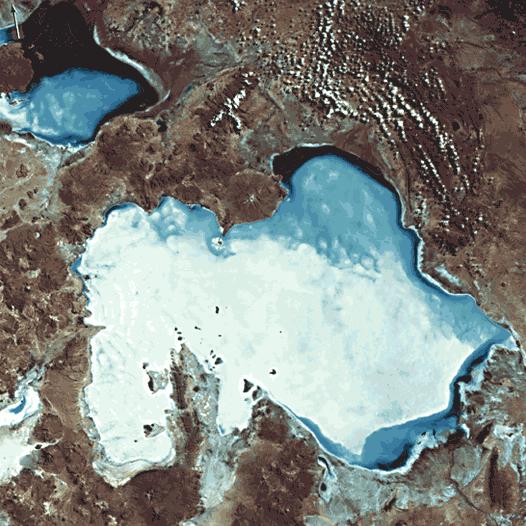
In all of my travels, Salar de Uyuni stands out as one of the most incredible things I've seen.  To say it's the world's largest salt flat at over 4000 square miles just doesn't mean much.  It's kind of neat to see it from space:

via
But to bring the numbers to a more human level and give the Salar de Uyuni a more apt description, it looks like a never-ending plain of perfectly flat, perfectly white snow.  And like much of Bolivia, it's around 12,000 feet above sea level.

There's so much salt, even the buildings are made of salt bricks, like this little one:

16 June 2011

bolivia's uyuni and the antique train cemetery


Uyuni doesn't have all that much to brag about, but it is the gateway to some of the world's most impressive attractions, including the world's largest salt flats.  Otherwise, it's pretty much just a train stop, evidenced by the train art on the main street.

13 June 2011

the long road to uyuni, bolivia


One of Bolivia's most visited destinations are the famous salt flats outside of Uyuni, but the area is pretty much in the middle of nowhere.  So, we took a bus from Tiwanaku (above) back to La Paz:

08 June 2011

tiwanaku, bolivia


We took a day trip from La Paz to Tiwanaku (also spelled Tiahuanaco and Tiahuanacu), now an archeological site considered "one of the most important precursors to the Inca Empire."

The area may have been inhabited as early as 3500 years ago as an agricultural village, but there are no records, as the people had no written language.  What they do know is that it served as the administrative and spiritual capital for about five hundred years (somewhere around 1500 years ago), and the theory is that a great drought about 1000 years ago sent people towards Lake Titicaca for better agricultural conditions.

03 June 2011

before and after carnaval in la paz, bolivia


Often, it's fascinating to see performers before and after the show.  Here are a few glimpses of the parade participants outside of the parades.

31 May 2011

carnaval in la paz, bolivia


The main difference between Carnaval in Oruro and Carnaval in La Paz were all of the clowns in La Paz.  There were tons of different costumes in Oruro but zero clowns.  In La Paz, you see many of the same types of groups as you'd see in Oruro, but with groups of dancing clowns thrown in.