Showing posts with label safety. Show all posts

08 April 2021

free bystander intervention training

Hollaback's now Right To Be, but either way, their Bystander Intervention Training is empowering and informative not just for people who want to support our fellow Asians who have been harassed— this is a training that will enable you to help anyone being bullied in any way while staying safe yourself.

It's free and really well done.

07 April 2021

chinese exclusion act of 1882 - free on pbs now


PBS is currently streaming (for free) this powerful film on the Chinese Exclusion Act of 1882, and like most of us, I had no idea this was a part of American history. It's heartbreaking that the Chinese were singled out as the only group in American history to be excluded from immigration while millions were streaming in from the rest of the world and how the Chinese were treated when they did try to settle here, and it's a part of our history that should not be forgotten.

15 March 2020

coronavirus as blessing?


My friend, Vernie, used to always say what our overpopulated world really needs is a new plague that can indiscriminately take out a big chunk of the world's population, and while the coronavirus isn't that, I do think there is a silver lining to this cloud.

Obviously, I don't want innocent people dying or even feeling sick. I don't want to see people I love freaking out and buying hazmat suits because they're so scared of what could happen. My heart goes out to the people who are really stressed about schools closing and wondering how their kids who depend on the free lunches are going to eat— not to mention how they're going to work and make sure their family is both safe and also that all of the bills will be paid.

And yes, it's stressful to go shopping and find that Costco is out of toilet paper and Trader Joe's is out of eggs, and you end up buying a case of bottled water even though your fridge has water because everyone else has carts filled with them. The stress is palpable and heavy, spiking and charging the very air we share, everywhere we go now.

It's hard to wrap our heads around all of the schools being closed and basically everything "normal" being canceled. My daughters' school will be closed for at least a month. My husband's work has given everyone two weeks off for spring break, and everything will happen remotely the two weeks after that. So, that's a month for him to be home, too.

This weekend, my daughter didn't attend Girl Scouts or a birthday pool party. My husband and I skipped a wine tasting party, and I was going to miss my acting class— until it was canceled.

We're canceling our spring break trip to Mexico to explore ruins with cousins and siblings. We're canceling our summer plans to go to Taiwan so my daughters can learn Chinese. I love travel and am sad to let those adventures go, but I also recognize how lucky I am to be "stuck" somewhere pretty nice and continue to strive to find the bright side of all this.

So, as we grapple to find our new normal, here is something to consider.

What if the world's problem is not coronavirus? What if our collective ailment is our competitive go-go-go mentality that has left everyone feeling increasingly isolated and stressed? What if the coronavirus and our now enforced quarantine is the solution?

I know this will not be a popular opinion, but I think maybe staying home and slowing down is just what we all need.

Maybe we were so pigheaded about going forward forward forward (or what we perceived to be forward), unable to even consider slowing down, that it took something as crazy as COVID-19 to literally knock the wind out of us, grabbing both of our arms and stapling us to the floor, to force us to snap out of our whirlwind lives and STOP for a second to look around and consider our lives.

I can imagine someone rising from the dust of being thrown to the ground, shaking their head in a daze as they look around, like Dorothy waking up in Oz. Except this is our real life that we maybe allowed to go on autopilot for too long.

How did I get here? Is this the life I want? Am I giving the world all that I can? Am I on the path that best serves me and my family? Am I pushing myself in the best ways-- growing, contributing, leaving a lasting positive impact on our collective world?

Maybe the coronavirus is actually a wake-up call to live our lives more fully.

If you're an adult, is this the grown-up life you'd dreamed of living when you were a kid?

If you're a parent, I can imagine the dazed head shaking and saying, "Wow, my daughter/son is how old now?" It can almost bring me to tears when I think of my young children— weren't they just babies a second ago? Where has the time gone? Have I done enough and loved them enough as a mama? What if the rest of their childhood passes in a blur, and I miss it? I can't let that happen!

If you're an even more mature adult, have you used your decades on this planet to serve humanity, gather wisdom, and share love and kindness to all? (Because you know, all people are supposed to have done that by the time they're old, right?)

We have more control than we think, and we can all live lives that we want. It's not just a luxury for the ultra rich (who I have not perceived to be happier or more free).

Within our mundane everyday lives, we can find sparkling moments of joy and love and connection and meaning, but we have to create the space and time for them— and many of us don't seem to have even a nanosecond to stop and breathe. (Hi, parents of young children! Hi, entrepreneurs giving our sweat and blood to nothing more than an idea! Hi, caretakers devoting yourselves to someone else's every day quality of life! And everyone who is giving their all to the struggle that is everyday life! I see you!)

Enter: CORONAVIRUS.

Now, even the world's #1 workaholic has an excuse to just sit down for a second and look around. And that's a form of grace and forgiveness. We all get a break.

So, while not glamorous or exciting, my family is doing a deeper cleaning/organizing of our house today-- something we never have time for. All those random doodads (my girls' "art supplies") that have been stashed here and there are now going to be given proper homes or discarded.

We've been looking at recipes we've been meaning to try but haven't had time for.

My 4-year-old says we should snuggle and read stories all day, and for the first time, it's an idea that we could actually consider.

Of course, we haven't even gotten to day 1 of a month of no school, so ask me how I'm feeling again in a couple days, and I might be ready to drop kick my fighting, complaining kids to outer space, but in the meantime, I'm going to try to find my place of peace and love. And remember to be grateful that for whatever unfathomable reason it might be, I'm given a little extra space to breathe right now.

There's something beautiful in stopping and looking around every once in a while, and I'll try to make the most of it.


15 April 2017

world peace day

via
The UN declared September 21st International Day of Peace, and that's great.

Today is my birthday, and in wishing big, I'd love to see another World Peace Day. I think we could have more than one World Peace Day, and wouldn't it be great if it were January 1st? It's easy to remember, we can start the new year on a peaceful path, and maybe like some new year's resolutions, it'll hold for a week or maybe even two. Or maybe World Peace Day could turn into World Peace Month, World Peace Year, and then World Peace Decade.

My partner says having a day or even a week of peace wouldn't necessarily get rid of the problems that underlie the fighting and resentments, and this is true, but maybe even a brief respite from fighting would give people a little room to breathe and calm down. Think a little more. And perhaps reflect on what a nice change peace is from fighting.

And while we're at it, we could have a minute of silence at noon, for example, to truly have world peace (and quiet). We could meditate on being kind and peaceful and creating a safe and harmonious world for our children.

I figure why not? Let's declare another World Peace Day and then another and another and see what happens.

09 April 2017

how to stop terrorism

via
"we live on such a beautiful planet 
but in such an ugly world." 
samantha morrison  

First, there was the Nice attack in France last summer where a man drove a 19-ton semi through a crowd celebrating Bastille Day and killed 86 and injured 434 innocent people. We were headed to Paris to live for a month soon after and were a little nervous but decided to go anyway. (It was fine.)

Then, we were really saddened by the Christmas market terrorist attack in Berlin in December where another guy drove a semi into a crowd of people and killed 12 and injured 56. These were again just innocent people trying to be merry during the holiday season. We were living here in Darmstadt (a small town in Germany), so the Christmas market again felt very close to home.

And now we hear about this senseless attack in Stockholm, and it just made my stomach drop. We were in Stockholm in August, visiting friends and marveling at how beautiful it was with its islets and sparkling blue water. My daughter saw her first "wild" swan floating just outside of Gamla Stan (the old town).

How can someone be so angry that they want to kill innocent people? People you've never met who you know nothing about? What do you have to tell someone to make them believe that murdering all of these people is not only acceptable but desirable? And maybe saddest of all, what does someone have to go through to want to do such a thing?

Terrorism is incomprehensible to me, and I can't imagine wanting to hurt innocent people. But here is some empowering advice for us all.

From Bruce Schneier, one of the most respected writers on terrorism:
most importantly, we should refuse to be terrorized. Terrorism isn't really a crime against people or property; it's a crime against our minds. 
If we are terrorized, then the terrorists win even if their plots fail. If we refuse to be terrorized, then the terrorists lose even if their plots succeed.
So, let us not be afraid. Let us live our lives with heads held high.

If we're in an airplane, and someone tries to threaten everyone, we must all start throwing objects at this would-be terrorist and do everything we can to stop them. We cannot let a few individuals ruin everything for everyone else.

28 March 2017

living in germany = eating vegetables

via
When we imagined a sabbatical year in Europe, we pictured something idyllic like this. It felt both far away and that it would last a long time. And yet, here we are, getting ready to leave already. A month ago, we already had to submit printed letters to both my daughters' schools and to the "castle" we live in to give the required three months' notice that we were leaving. 

When we got here, it felt like we were never going to leave. Now, we have 58 days left in Europe. (Not that I'm counting.) 

via
So, we've been in Darmstadt, Germany, for half a year now, and it took us almost that long just to live here legally with all of the necessary paperwork filed and to find great schools for both of our daughters. 

We joke that we should have lived here longer for it to be worth all of the set-up time, energy, and trees killed, but I don't think we would choose to live in Germany again. And before anyone gets offended, I will say we have learned a lot from living here, have made some lovely friends, and have really enjoyed many aspects of life in Darmstadt. 

So, here's our recap of life in Germany:

16 November 2014

write your way into peace and clarity of mind

Eric Barker has done it again. Here's how to write your way out of anxiety, tragedy or heartache in four steps.

How To Deal With Anxiety, Tragedy Or Heartache – 4 Steps From Research

  By Eric Barker
how-to-deal-with-anxiety

“You don’t remember me, but I was in your experiment a year ago. I just wanted to thank you. It changed my life.”
James Pennebaker has had a number of people say this to him over the years.
In the early 80’s he came across a study showing that people who experienced personal traumas but didn’t discuss them were more likely to get sick.
He wondered if just writing about their emotional upheavals could help people recover. And the research he did changed lives.
In the 30 years since, hundreds of studies have documented the effectiveness of expressive writing.
It helped with anxiety, tragedy, heartache… It even gave relief to those coping with cancer, heart disease, chronic pain, and AIDS.
People who write about their problems gain a host of benefits including feeling happier, sleeping better, and even getting better grades.
Across multiple studies, people who engage in expressive writing report feeling happier and less negative than they felt before writing. Similarly, reports of depressive symptoms, rumination, and general anxiety tend to drop in the weeks and months after writing about emotional upheavals (Lepore 1997). Other studies found improvement in overall well-being and improved cognitive functioning (Barclay & Skarlicki 2009).
I wanted to learn more, so I gave the man himself a call.
Jamie Pennebaker is a professor at the University of Texas at Austin and the author of a number of books including:
In this post you’ll learn how writing can help you overcome emotional hardships and the best way to use it to help you get past tough times.
Let’s get started.

Can Just 20 Minutes of Writing Change Your Life?

Bottling up your problems is stressful. People who keep their struggles a secret go to the doctor 40% more often than those who don’t.
…among those who had traumas, those who kept their traumas secret went to physicians almost forty percent more often than those who openly talked about their traumas (Pennebaker & Susman 1988). Later research projects from multiple labs confirmed these results. Adults whose spouses had committed suicide or died suddenly in car accidents were healthier in the year following the death if they talked about the trauma than if they didn’t talk about it… Not talking about important issues in your life poses a significant health risk.
Some of us talk to friends or see a therapist when life gets hard. But not everyone.
It’s risky. Talking about your problems can mean feeling judged. You’re putting yourself on the line when you’re most vulnerable.
But writing lets you get many of the benefits of talking about your problems without the risk.
Here’s Jamie:
…in an ideal world, it works very similar to talking to a friend. The killer problem is when you talk to a friend or even a therapist, you’re putting yourself on the line. For it to work that other person has to be completely accepting, and the reality is we don’t tell our friends a lot of really deep and personal things because we think it might hurt the relationship. That’s the beauty of writing. You don’t have to worry about other people looking down on you or feeling nervous about putting yourself out there.

12 June 2013

drowning doesn't look like drowning

I just came across this article on Slate and thought it was really informative.  As summer approaches, let's hope being informed keeps us and our little loved ones safe.

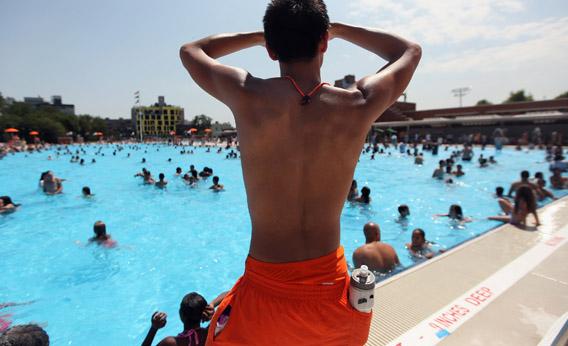
A lifeguard keeps watch on opening day of the newly renovated McCarren Park Pool on June 28, 2012, in Brooklyn, New York.
Photo by Mario Tama/Getty Images

The new captain jumped from the deck, fully dressed, and sprinted through the water. A former lifeguard, he kept his eyes on his victim as he headed straight for the couple swimming between their anchored sportfisher and the beach. “I think he thinks you’re drowning,” the husband said to his wife. They had been splashing each other and she had screamed but now they were just standing, neck-deep on the sand bar. “We’re fine; what is he doing?” she asked, a little annoyed. “We’re fine!” the husband yelled, waving him off, but his captain kept swimming hard. ”Move!” he barked as he sprinted between the stunned owners. Directly behind them, not 10 feet away, their 9-year-old daughter was drowning. Safely above the surface in the arms of the captain, she burst into tears, “Daddy!”
How did this captain know—from 50 feet away—what the father couldn’t recognize from just 10? Drowning is not the violent, splashing call for help that most people expect. The captain was trained to recognize drowning by experts and years of experience. The father, on the other hand, had learned what drowning looks like by watching television. If you spend time on or near the water (hint: that’s all of us) then you should make sure that you and your crew know what to look for whenever people enter the water. Until she cried a tearful, “Daddy,” she hadn’t made a sound. As a former Coast Guard rescue swimmer, I wasn’t surprised at all by this story. Drowning is almost always a deceptively quiet event. The waving, splashing, and yelling that dramatic conditioning (television) prepares us to look for is rarely seen in real life.

15 January 2010

south africa

I'm terribly behind in my travel coverage, so here we go on a whirlwind catch-up post.

It seems wrong to be talking about my backpacking adventures when people are barely recovering from a massive earthquake, but taking a small break from all that suffering is probably healthy, too. So, I hope you'll forgive this report.

South Africa really deserves several individual posts. If I had more time, I would have written more in-depth entries on Cape Town, the overnight trains, Durban, Bloemfontein, Johannesburg, Pretoria and Hoedspruit. But, I don't. So, here's the abbreviated, mostly visual version.

Cape Town: gorgeous, sophisticated in some parts, commercial in some and granola or industrial in others. In other words, a metropolitan city on the coast with beautiful Table Mountain as a backdrop. The best breakfasts I'd had in ages. And as my brother-in-law pointed out, its rolling hills and Victorian architecture reminded me of San Francisco, too.

South African trains were one of our favorite parts of exploring the country. For very reasonable rates, we traveled quite luxuriously in comfortable sleeper cars, had our meals in the nice and inexpensive dining car booths, and covered great distances knowing we'd be safe and arrive pretty much right on time.

Durban was a mixed bag of experiences. I almost got pickpocketed when three kids ambushed me-- but they didn't manage to steal my backpack (which was securely strapped to my waist and chest) or get anything out of my pocket (where my money had been hiding safety-pinned shut in the bottom). It was scary, though, and the experience made us much more cautious about our safety.

On the positive, Durban's aquarium, designed to resemble an old submarine, is one of the best I've ever been to, we visited an awesome artists' workshop, came across a band contest, and we had some amazing bunny chow (curry in a bread bowl).

(This one may look like a boring old blue fish, but it's huge. My partner is standing just to the left of it.)

I liked the silhouettes of the people against the blue.

Bloemfontein (or Bloem, as the locals call it) was a pleasant surprise, as we were more or less forced to stop there because it's smack in the middle of the country. We saw flowers we'd never seen before (appropriate for a city named the fountain of flowers), went to the Oliewenhuis Art Museum and enjoyed both their art collection (free admission with optional donation) and their outdoor sculpture garden and cafe. They have lush, green grounds, a carousel with terrific animals (and not even one horse) and terrific food to boot.

Our hostel was a very cool converted warehouse, but my pack was sifted through when I left it with the staff while my partner and I went out exploring. I didn't have anything worth stealing, so nothing was taken, but it isn't nice to open your bag and see that someone has gone through your stuff. (For the record, we stayed at Naval Hill Backpackers.)

Johannesburg has a reputation for being something like hell on earth, and they have video footage to prove it (see Soweto during the 90s). But the Apartheid Museum is absolutely worth a visit, and many have said going to Soweto is inspiring, too. The downtown looks like a nondescript run-down urban center, and the suburbs surrounding central Joburg are really, really ritzy. It feels like southern California with its temperate weather, huge shopping malls and sprawling freeways, the mansions are gated and patrolled, and the wealthier neighborhoods are very manicured.

Pretoria feels like a large suburb of Joburg, but it is pretty and pleasant (and a bit safer, too).

The highlight of our Pretoria visit was meeting up with my brother-in-law, who happened to be there on business. He treated us to amazing meals and luxurious accommodation (especially after some of the places we'd stayed), and it was nice to be with someone who knew us, understood us and spoke our same culture and language.

While our brother was busy making the world a better place, we went to the Voortrekker Monument, a source of great Afrikaner pride, which boasts the largest marble frieze in the world (twenty-seven carved panels telling the story of the pioneering Voortrekkers' Great Trek) and a panoramic view of both Joburg and Pretoria. Not to mention the animals that were grazing there (we saw zebras and antelopes) and some other neat and unexpected photographic opportunities.

And to top off an incredibly rich and varied visit to South Africa, we went to visit one of my Swiss-German friends (who I hadn't seen in over ten years!) and reconnect over a surprise elephant ride. I think I just may have the coolest friends in the world. Thank you, Simone!

And we saw our first dung beetle, too.

Next up: Lesotho.